

The Role of IoT in Enhancing Airline Operational Efficiency and Safety
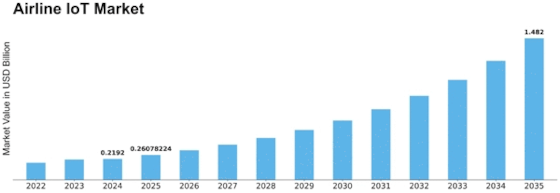
In a world where efficiency and real‑time responsiveness matter more than ever, the aviation sector is looking at ways to transform how flights are planned, executed, and maintained. Gone are the days of rigid maintenance schedules and static operations; instead, airlines are embracing dynamic, data‑driven models that adapt to real conditions.
A key enabler of this shift is IoT‑based flight operations. By equipping aircraft systems and ground infrastructure with sensors, communication modules, and analytics platforms, airlines can monitor flights in real time — from engine performance and fuel efficiency to cabin environment and baggage flow — and react proactively.
This means predictive maintenance becomes a reality. Rather than waiting for a component to fail or following fixed maintenance intervals, airlines can now respond to real‑time alerts: a sensor detects abnormal vibration, temperature or pressure, and maintenance teams are dispatched even before a failure occurs. As a result, unscheduled downtime is minimized, aircraft availability improves, and safety margins increase.
Flight scheduling and route planning also benefit. With live data on weather, air traffic, fuel consumption, and aircraft performance, airlines can optimize flight paths, adjust speed, and manage fuel usage more efficiently. This not only reduces costs but also lowers environmental impact — a critical advantage as airlines face increasing pressure to reduce carbon emissions.
On the operational side, IoT‑based systems streamline the entire ground‑to‑aircraft lifecycle. Boarding processes, baggage handling, refuelling, cabin preparation, and turnaround tasks can all be coordinated more precisely — aided by real‑time data sharing between ground crews, pilots, and operations centers. For passengers, this translates to more on‑time flights, fewer delays, and a smoother overall travel experience.
Yet, integrating such IoT‑based flight operations is no trivial task. Airlines must invest in sensor hardware, reliable communication infrastructure, data‑processing capabilities, and secure, scalable networks. Additionally, legacy aircraft and ground systems may require major upgrades to support modern IoT workloads. Data privacy and security are also significant challenges — airlines must safeguard sensitive operational and passenger data from cyber threats.
Despite these challenges, the potential gains are compelling. Increased aircraft utilization, lower maintenance costs, improved safety, and enhanced passenger satisfaction are powerful incentives. In a competitive and cost‑conscious industry, IoT‑based flight operations can provide a sustainable edge.
In the coming years, as adoption grows and technologies mature, IoT‑enabled flights may become the norm rather than the exception. For airlines willing to invest, the payoff could be substantial — in efficiency, reliability, and customer trust.
Honeywell (US), General Electric (US), Thales Group (FR), Rockwell Collins (US), Boeing (US), Airbus (FR), IBM (US), Cisco Systems (US), SITA (CH)
Table of Contents
SECTION I: EXECUTIVE SUMMARY AND KEY HIGHLIGHTS
SECTION II: SCOPING, METHODOLOGY AND MARKET STRUCTURE
SECTION III: QUALITATIVE ANALYSIS
SECTION IV: QUANTITATIVE ANALYSIS
SECTION V: COMPETITIVE ANALYSIS ........
Related Report:
In Flight Voice Recognition Market
Aviation Beacons Technology Market

 Urdu
Urdu
 Arabic
 French
 Spanish
 Portuguese
 Deutsch
 Turkish
 Dutch
Dutch
 Italiano
 Russian
 Romaian
 Portuguese (Brazil)
 Greek
Greek
