

The Future of Naval Defense: Rising Demand for Sonobuoy Deployment Systems
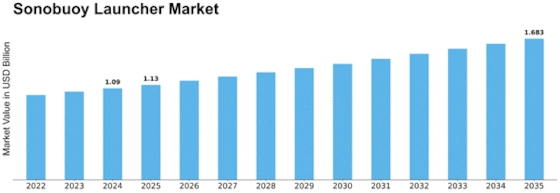
Maritime security has sharply expanded beyond surface-based combat readiness. Threats now originate below the surface, beyond visual range, in environments where conventional surveillance cannot operate effectively. This rapid shift has made underwater intelligence a priority for every naval force seeking to protect territorial waters and commercial sea routes.
At the center of this evolution is the increasing role of Maritime surveillance launchers, which allow naval aircraft to deploy sonar buoys efficiently during reconnaissance or anti-submarine missions. Launchers determine how quickly and accurately these buoys can be placed into the water to form sonar grids capable of tracking submarines over large distances. Their precise activation and release mechanisms ensure that buoys remain operational upon impact and transmit acoustic data without delay.
Global interest in maritime surveillance launchers is rising due to the overlap between military operations and economic protection. Subsea trade routes, offshore energy fields, and commercial shipping lanes require active monitoring to mitigate potential interference or territorial violations. Airborne surveillance using sonobuoy launchers provides rapid scanning coverage compared to surface-ship-based sonar, enabling faster threat confirmation and tactical response.
Modern systems focus on reliability, reduced reloading time, and compatibility with different buoy types. Naval aviation fleets increasingly prefer modular launchers that can be integrated into a wide range of aircraft platforms without structural redesign. With acoustic warfare becoming more sophisticated, navies must secure persistent access to underwater intelligence, especially during patrols or rapid-deployment missions.
Future innovation will revolve around lightweight launcher composites, advanced recoil absorption, autonomous buoy launch sequencing, and multi-mission launcher programming. These upgrades will reinforce international maritime security initiatives and strengthen naval dominance in strategic ocean zones.
Lockheed Martin (US), Northrop Grumman (US), Raytheon Technologies (US), Thales Group (FR), Leonardo (IT), BAE Systems (GB), Hewlett Packard Enterprise (US), L3Harris Technologies (US)
Table of Contents
SECTION I: EXECUTIVE SUMMARY AND KEY HIGHLIGHTS
SECTION II: SCOPING, METHODOLOGY AND MARKET STRUCTURE
SECTION III: QUALITATIVE ANALYSIS
SECTION IV: QUANTITATIVE ANALYSIS
SECTION V: COMPETITIVE ANALYSIS ........
Related Report:
china used serviceable material usm market
canada air charter services market
italy air charter services market

 Urdu
Urdu
 English
 Arabic
 French
 Spanish
 Deutsch
 Turkish
 Dutch
Dutch
 Italiano
 Russian
 Romaian
 Portuguese (Brazil)
 Greek
Greek
