As per Market Research Future analysis, the Mushroom Cultivation Market Size was estimated at 5.523 USD Billion in 2024. The mushroom industry is projected to grow from 6.079 USD Billion in 2025 to 15.89 USD Billion by 2035, exhibiting a compound annual growth rate (CAGR) of 10.08% during the forecast period 2025 - 2035
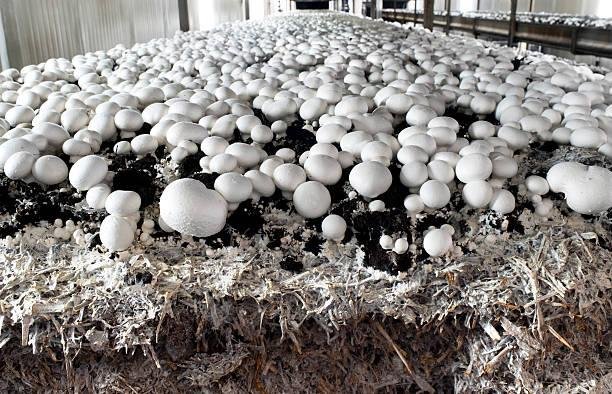
The mushroom cultivation market is gaining significant traction as agricultural diversification and sustainable farming practices become increasingly important worldwide. Mushrooms are considered a high-value crop that requires relatively low investment compared to traditional farming. A key factor driving this growth is the increasing adoption of substrate-based mushroom cultivation methods, which utilize organic materials such as straw, compost, and sawdust for efficient production.
These substrate-based methods are cost-effective and environmentally friendly, as they recycle agricultural waste into productive use. This not only reduces waste but also improves soil health and sustainability. Farmers are increasingly adopting these practices to enhance profitability and reduce environmental impact.
The role of training and skill development programs is also crucial in expanding the market. Governments and agricultural organizations are providing education on modern cultivation techniques, helping new farmers enter the industry with confidence.
Furthermore, the increasing demand for processed mushroom products such as dried mushrooms, powders, and canned varieties is driving market growth. These products offer longer shelf life and convenience, making them popular among consumers and food manufacturers.
The expansion of retail and online distribution channels is also improving market accessibility. Consumers can easily purchase fresh and processed mushrooms through supermarkets, specialty stores, and e-commerce platforms.
GLOBAL SUPPLY CHAIN & MARKET DISRUPTION ALERT
Escalating geopolitical tensions in the Middle East, particularly around the Strait of Hormuz and the Red Sea, are creating significant disruptions across global energy, chemicals, and logistics markets. Critical shipping corridors are under pressure, with major oil, LNG, petrochemical, and raw material flows at risk, triggering supply chain delays, freight cost surges, insurance withdrawals, and heightened price volatility. These disruptions are increasing operational risks and cost uncertainties for industries dependent on global trade routes and energy-linked feedstocks.
Access our real-time disruption analysis covering supply chain risks, price outlook scenarios, logistics impacts, and alternative sourcing strategies.
👉 Request a Sample Report to understand the potential impact on your industry and get actionable insights to support procurement, risk management, and supply chain planning. Contact us today to receive the latest market intelligence and mitigation strategies.
FAQs
Q1. What are substrate-based mushroom cultivation methods?
A1. Techniques that use organic materials like straw and compost for growing mushrooms.
Q2. Why are processed mushroom products popular?
A2. They have longer shelf life and are convenient to use.
Q3. How can farmers start mushroom cultivation?
A3. Through training programs and adopting modern farming techniques.



 Urdu
Urdu
 Arabic
 French
 Spanish
 Portuguese
 Deutsch
 Turkish
 Dutch
Dutch
 Italiano
 Russian
 Romaian
 Portuguese (Brazil)
 Greek
Greek
